L-Carnitine is a naturally occurring amino acid derivative that plays a critical role in cellular energy production. It is primarily involved in transporting fatty acids into the mitochondria, where they are converted into energy.
It is widely studied for its potential role in fat metabolism, energy support, exercise performance, and recovery.
Fat metabolism & energy production
L-Carnitine is associated in research with:
Transporting fatty acids into cells for energy conversion
Supporting mitochondrial function and cellular energy production
Enhancing the body’s ability to utilize stored fat as fuel
Its role in energy metabolism has made it a focus in studies related to physical performance and metabolic health.
Exercise performance & endurance support
In experimental and sports nutrition research, L-Carnitine is studied for its potential influence on:
Improving endurance and exercise capacity
Supporting muscular energy during physical activity
Reducing exercise-induced fatigue
These effects are linked to its role in optimizing energy availability and mitochondrial efficiency.
Recovery & muscle support
L-Carnitine has also been explored for its potential role in:
Supporting post-exercise recovery
Reducing muscle soreness and exercise-related stress
Promoting recovery from intense physical exertion
Research suggests it may assist in maintaining cellular function during periods of increased physical demand.
Cognitive & neurological support
L-Carnitine is studied for its interactions with the nervous system, including:
Supporting cognitive performance and mental clarity
Promoting healthy brain energy metabolism
Helping protect cells from oxidative stress
Certain forms, such as Acetyl-L-Carnitine (ALCAR), are of particular interest in neurological and cognitive research.
Metabolic & cardiovascular research
L-Carnitine is also associated with studies involving:
Metabolic efficiency and nutrient utilization
Cardiovascular energy support
Healthy circulation and cellular function
Its involvement in mitochondrial energy pathways makes it relevant to multiple areas of metabolic research.
Mechanism of action
Supports the transport of long-chain fatty acids into mitochondria
Assists natural cellular energy production processes
Does not function as a stimulant
Its effects are associated with improving energy efficiency at the cellular level rather than artificially increasing stimulation.
Summary
L-Carnitine is a naturally occurring compound studied for its role in energy metabolism, fat utilization, exercise performance, and recovery through mitochondrial support mechanisms.
In short:
Supports fat metabolism and energy production
Enhances mitochondrial function
Promotes exercise endurance and recovery
Supports cognitive and metabolic health
Non-stimulant energy support mechanism
Dosage
The commonly studied dosing range for L-Carnitine is 600mg to 1800mg daily. L-Carnitine comes in liquid form and does not require reconstitution.
Disclaimer: This content is for educational and research purposes only and is not intended as medical advice. Always conduct your own research and consult a qualified professional before use.
Hello! I’m your personal AI peptide concierge. Ask me about different peptides, dosing information, or instruction on using peptides. For example - ask me "What are the benefits and dosing for BPC-157" and I'll tell you everything you need to know.


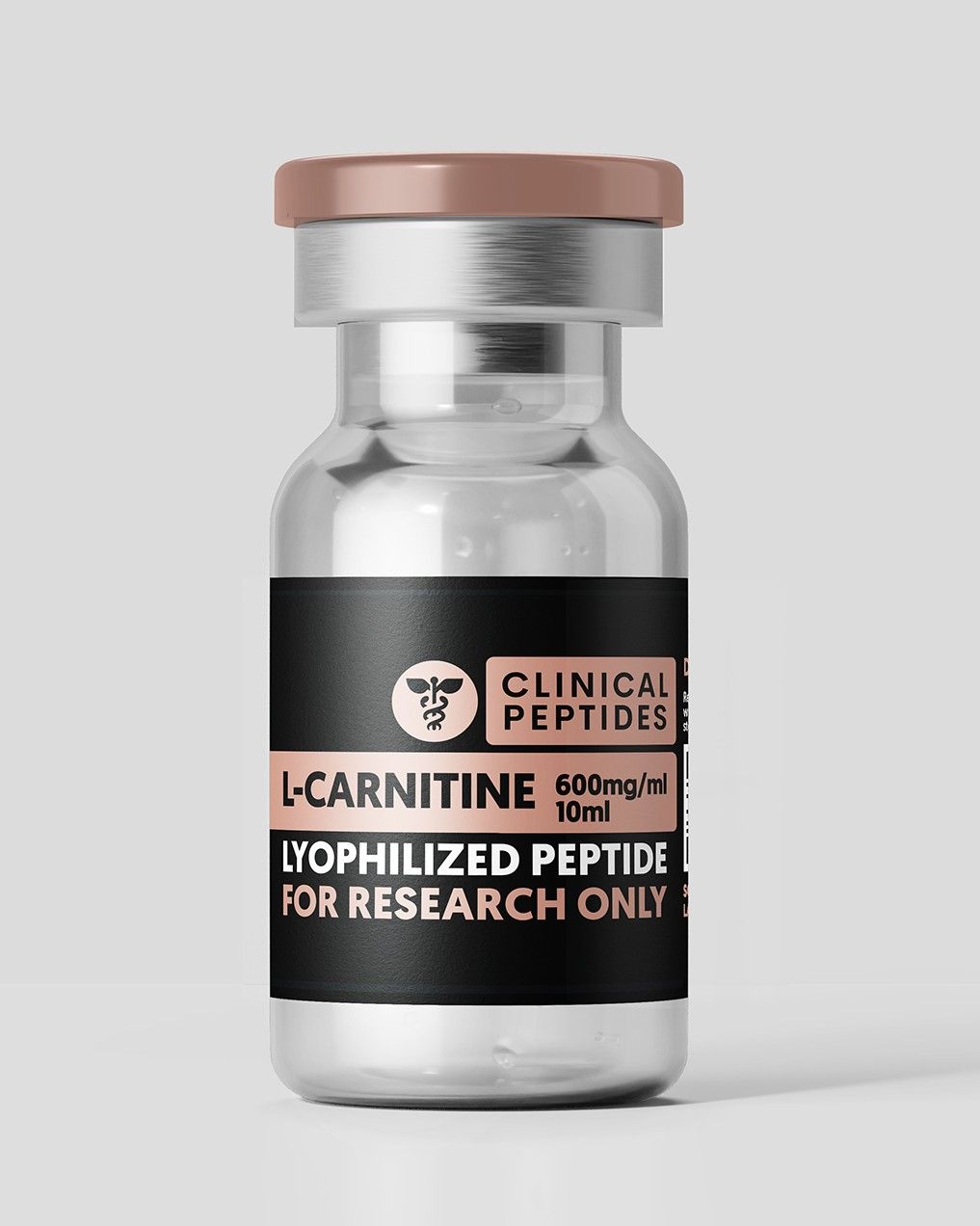
 L-Carnitine

Reviews
There are no reviews yet